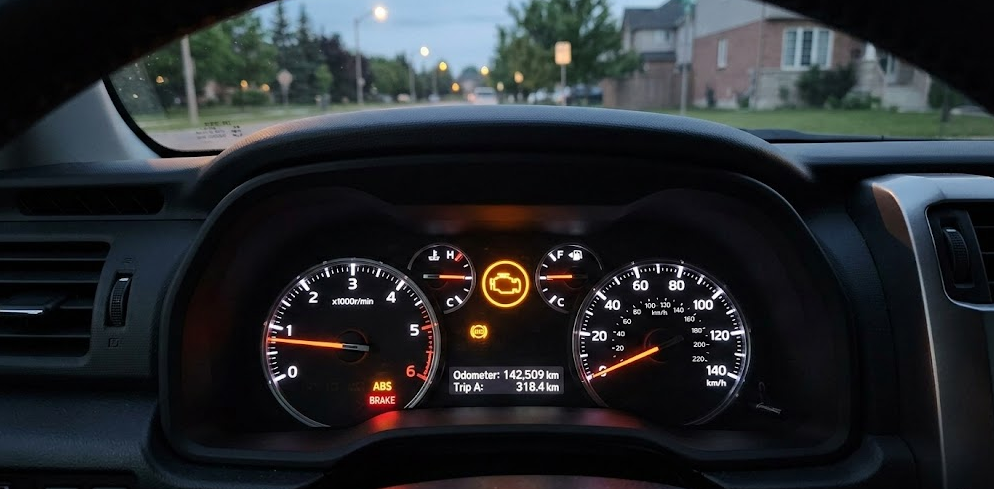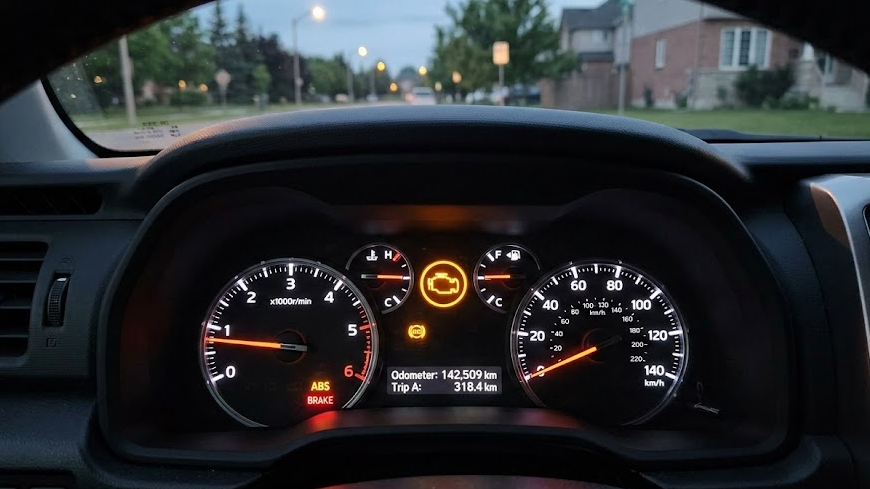
G’day. I’m a mobile mechanic here in Perth, and if I had a dollar for every time a client called me saying they’ve just seen a little orange engine silhouette popped up on their dash, I’d be retired in Margaret River by now.
That light, technically known as the Malfunction Indicator Lamp (MIL), is the most misunderstood part of your car. In the old days, a car would just start smoking or clunking to tell you something was wrong. Modern vehicles are smarter. They use a complex network of sensors to tell you there’s a problem before you’re stranded on the side of the Kwinana Freeway in 40-degree heat.
If that engine light is staring at you right now, don’t panic. Here is exactly what you need to do, what’s happening inside your car’s “brain,” and why a mobile mechanic in Perth is often your best bet.
1. The Immediate “Triage”: What Color is the Light?
Before you do anything, look at the behavior of the light. It’s like a traffic light system:
- Steady Orange/Yellow: This is an “advisory” warning. The computer has detected a fault that is affecting emissions or performance. The car is usually safe to drive home or to a safe spot, but it needs a doctor soon.
- Flashing Orange/Red: STOP IMMEDIATELY. A flashing engine light usually indicates a “catalyst-damaging misfire.” This means unburnt fuel is entering the exhaust and can melt your catalytic converter (an expensive $2,000+ part) within minutes. Pull over and call a mechanic.
2. The Science of the “Handshake”: Engine Diagnostics
When that light comes on, your car has logged a DTC (Diagnostic Trouble Code) in its ECU (Engine Control Unit).
To fix it, we perform what I call the “Digital Handshake.” We use an OBD-II (On-Board Diagnostics) scanner to talk to the car. However, there’s a big difference between the $20 scanners you buy online and the professional equipment used by specialists like VCM Automotive.
- Consumer Scanners: These usually just give you a code (e.g., P0420). They don’t tell you why the code is there.
- Professional Diagnostic Equipment: High-end tools (like those from Snap-On or Autel) allow us to see “Live Data.” I can see exactly how many grams of air are entering your engine per second, the voltage of your oxygen sensors, and the fuel trim percentages in real-time. This allows me to find the root cause, not just the symptom.
3. Common Culprits: Why is the Light On?
In Perth, we see certain patterns due to our unique environment:
- Oxygen (O2) Sensors: These measure how much unburnt oxygen is in the exhaust. Perth’s coastal salt air and heat can cause these sensors to fail or become sluggish.
- The Loose Fuel Cap: Believe it or not, a loose or cracked gas cap can trigger the light. The car’s EVAP system thinks there’s a fuel vapor leak. Always check this first!
- Mass Air Flow (MAF) Sensor: This measures the air coming into the engine. Because Perth is so dusty (especially in the new estates like Ellenbrook or Baldivis), sand and grit can coat this sensor, sending “garbage” data to the ECU.
- Spark Plugs and Ignition Coils: If your car is stuttering or “jerking,” it’s likely a spark issue. The heat in WA is brutal on ignition coils, which are basically mini transformers that live on top of a hot engine.
- EGR and DPF Issues (Diesel): If you drive a HiLux or Ranger, but only use it for short trips in Subiaco, your Diesel Particulate Filter (DPF) will clog up. The light comes on because the engine can’t “breathe.”
4. Why Use a Mobile Mechanic Like VCM Automotive?
In the old days, you’d have to book a tow truck, wait three days for a shop to look at it, and pay for the privilege of being without a car. Mobile diagnostics have changed the game in Perth.
- We Come to the Fault: If your light is flashing, you shouldn’t drive the car. I come to your driveway or workplace. This saves you a $150 towing fee immediately.
- Transparent Pricing: Mobile mechanics in Perth, like VCM Automotive don’t have the massive overheads of a huge dealership in Osborne Park. You’re paying for the expertise and the tools, not the fancy showroom espresso machine.
- On-Site Solutions: 80% of engine light issues can be fixed on your driveway. Whether it’s a sensor replacement, a “forced regeneration” of a diesel filter, or a simple spark plug swap, we do it then and there.
5. Suggested Solutions: The Path to Clearance
- Don’t Clear the Code Yourself: If you just “delete” the code with a cheap scanner, the car’s computer loses the “freeze-frame data” (a snapshot of exactly what was happening when the fault occurred). This makes it harder for me to help you later.
- Check Your Fluids: Sometimes a low oil level or an overheating engine can trigger the light as a secondary warning.
- Book a Diagnostic Scan: A professional scan is the only way to be sure. It usually takes about 30–60 minutes to pinpoint the exact failure.
Key Features of VCM Automotive Diagnostics
- Full System Scan: We don’t just check the engine; we check ABS, Airbags, and Transmission.
- Live Data Logging: We see what the engine is doing while it’s running.
- Expert Advice: We explain the “why,” not just the “what.”
- Warranty Safe: Our digital records keep your new car warranty intact.
Frequently Asked Questions (FAQ)
Q1: Will my car pass its registration/pits check with the engine light on?
No. In WA, an active engine management light is an automatic fail for a safety inspection or pits check. It must be cleared and the underlying fault fixed.
Q2: I cleared the light, and it came back two days later. Why?
Because you didn’t fix the physical problem. The ECU runs “readiness monitors.” Once the car has driven a certain distance (a “drive cycle”), it re-checks the sensor. If the sensor is still bad, the light returns.
Q3: Can a “bad batch” of fuel trigger the light?
Yes. Low-quality fuel can cause “pinging” or “knocking,” which the knock sensors detect. This will trigger a light. Always try to use a reputable fuel station if your car is sensitive.
Q4: Is it expensive to fix?
It ranges. A loose fuel cap costs $0 to tighten. A faulty oxygen sensor might be $250. A blocked catalytic converter could be $2,000. This is why an early diagnostic is vital, it stops a small problem from becoming a big one.
Q5: Can VCM Automotive fix the light if it’s a computer/software issue?
Yes. Modern mobile mechanics carry software that can perform “re-learns” and “adaptations.” Sometimes the hardware is fine, but the computer needs to be told how to work with a new sensor.